

Leadership presence in the age of notifications
Leaders signal what matters by where they place their attention.
I was in a meeting recently and noticed something interesting.
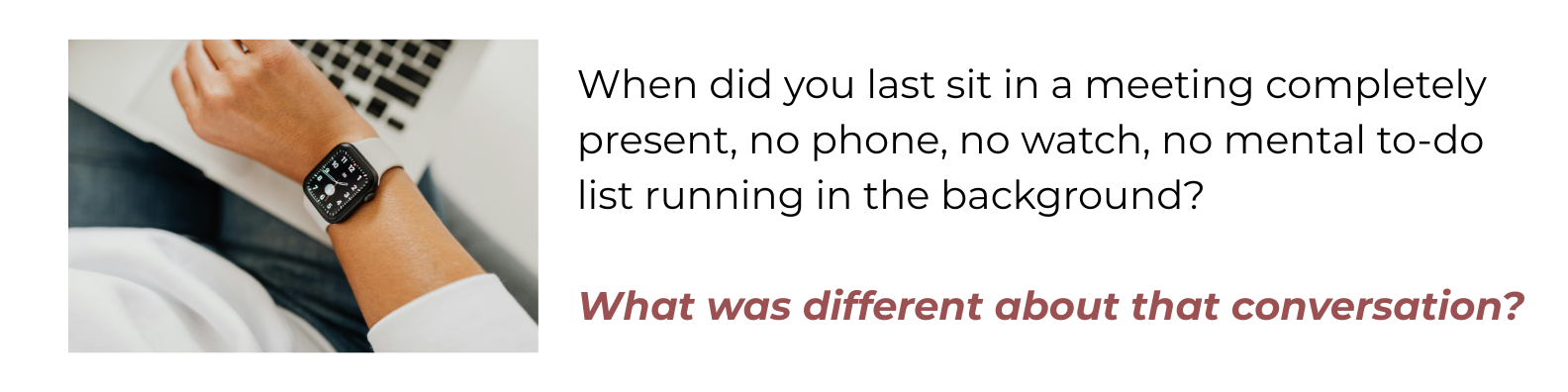
Around the table were several people wearing smart watches. Throughout the meeting, wrists kept turning slightly. Quick glances. Subtle taps.
Not to check the time; that takes a second. But to read messages that had just arrived.
Maybe this is normal now. But part of me kept thinking - is this actually okay? Unless someone has flagged at the start of a meeting that they're expecting something urgent, how have we become so switched on that we can have one ear on the conversation and one eye on the watch?
I'm honestly not immune to any of this. I'm a sucker for the scroll. Gluten free restaurant openings, pandas falling over and looking bewildered, and memes I absolutely ‘have to’ send my kids for the annoyance factor. The wifi on planes. Oh my days. We've reached a point where two hours above the clouds feels like a missed opportunity rather than a sanctuary. But I have to draw the line somewhere
How did we get here?
There was a time when work had hours. You left the office and the work stayed there. Smartphones rewrote that contract without us really noticing.
Suddenly availability became the default. Being reachable at all hours felt like commitment. Responding quickly felt like competence. And somewhere along the way, the boundary between work time and everything else dissolved.
This is not a problem unique to leadership; it is a basic human one. We have collectively normalised a level of connectivity that would have seemed extraordinary twenty years ago, and we've barely stopped to ask whether it's actually working for us.
The continual scroll. The quick response to a message that landed thirty seconds ago. The phone carried openly in hand, always within reach. Work emails checked last thing at night and first thing in the morning. Wi-fi on the plane because two hours offline feels like too long.
We have built our days around the assumption that we should always be available. But available for what, exactly? And at what cost?
What it costs in the room
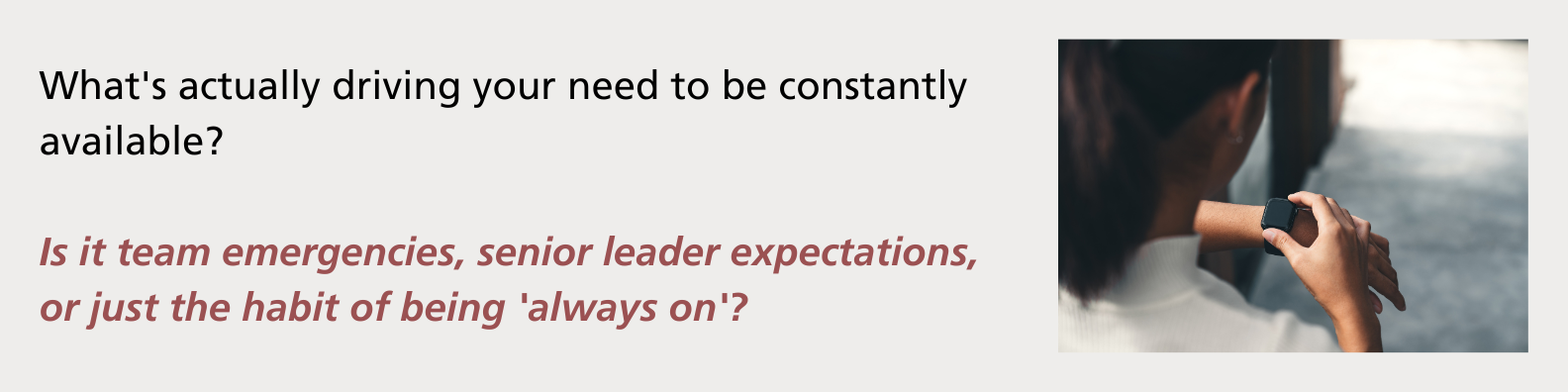
When we're half-listening while scanning notifications, we send a subtle signal: this conversation isn't quite important enough for my full attention.
People notice where a leader's attention goes. If they feel they're competing with a wrist or a phone, they stop bringing their best thinking to the table. They self-censor. They bring smaller problems. They stop thinking out loud.
That erosion is quiet, but it's real. And for new managers especially, the cost compounds quickly. You're still building trust with your team. Every interaction is either adding to that trust or quietly chipping away at it. A team that doesn't feel genuinely heard will find other ways to navigate around you rather than with you.
New managers often feel particular pressure to be constantly switched on. The 'Expert' in us wants to be the fastest to answer, but the 'Leader' in us needs to be the most present. If I respond quickly, I’m being a great operator. But presence is the work of a leader.
What intentional availability actually looks like
Being deliberate about availability doesn't mean being unreachable. It means being thoughtful about when you are fully present and protecting that.
For me, a small habit that has made a real difference is that I switch off phone notifications after dinner and put it on charge outside the bedroom. It removes the temptation to check one last time, gives my mind space to actually rest, and means I start the next day without having already consumed an inbox before I've had a coffee.
It sounds small. But small habits compound.
For leaders, intentional availability might look like protecting the first hour of the morning for thinking before the notifications start. Or closing the laptop during a one-on-one so the person in front of you has all of you. Or starting a meeting by asking everyone, including yourself, to put devices away for the next thirty minutes.
Technology is not the enemy, and the people in the room deserve your full attention. And frankly, so does your own thinking.
A small experiment for this week
Try one meeting with phones and watches off the table. In your next one-on-one, keep your phone out of reach. Notice what changes, in the conversation, in how people contribute, in how you feel at the end of it.
Then ask yourself: what would shift if this became the norm rather than the exception?
