How your habits shape your leadership identity
I didn’t start writing on LinkedIn because I loved it. I started because I knew I should.
Brand building. Visibility. Showing up consistently. Sharing ideas. Letting people get to know you.
At first, it felt like a chore.
But somewhere along the way, writing stopped being a task and started being enjoyable.
I began finding inspiration in unlikely places - mostly on my morning dog walks. No headphones. Just me, my dog, and the sounds of nature. Those walks gave me ideas to write about, questions to bring into my coaching sessions, and thoughts I wanted to capture. Not because I should, but because I had something to share.
This little guy was this morning’s inspiration

The Bush Telegraph in real life!
While walking, I realised that the clarity I was finding through writing is exactly what my clients are searching for. That shift from drudgery to creativity brought unexpected clarity. Not so much about my brand, but about my work itself.
I noticed a pattern with my clients. They would reach the end of their committed six sessions and say, "I'm not done yet." They had gained clarity and broken through barriers, but they were looking for their what next. Their transformation.
Writing helped me see the gap between the clarity and transformation, and allowed me to design my offerings with that in mind.
What is it about habits?
Perhaps that the joy tends to arrive after the consistency, not before. And clarity often shows up in ways you did not expect.
Maybe you have experienced this too. You commit to something because you know you should, like weekly one-on-ones, Friday reflections, or regular check-ins with your team. At first it feels like admin. Then one day, you realise it’s the very thing that keeps you grounded and connected to the team, especially when everything else feels chaotic.
Habits do more than build discipline.
They reveal patterns.
And over time, those patterns shape who you are becoming, not just as a person but as a leader.
Why I recommend Atomic Habits to almost every client
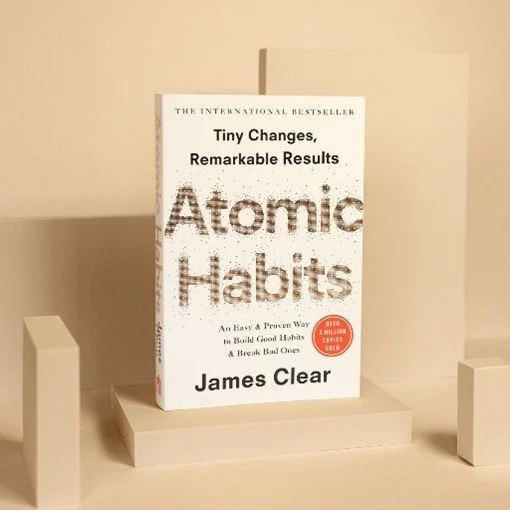
When I suggest clients read Atomic Habits by James Clear, they often assume it is about productivity tricks or morning routines. For me, it is about identity.
Clear’s central insight is this: he recommends setting a direction with goals but spending your time and energy building the systems of small, incremental habits (atomic habits) that compound over time. There is a difference between "I should give feedback" and "I give feedback." Between "I need to delegate more" and "I delegate." One is a hope. The other is a description of how you show up.
The habit isn’t just about the calendar; it’s about the shift from the person who 'does' to the person who 'thinks and guides.' When you stop checking every email immediately, you aren't just 'managing time' - you are assuming the identity of a leader whose focus is needed on the horizon, not just the inbox.
Small changes. Big shifts.
One leader realised she was still checking every piece of work before it went out. Not because her team needed it, but because she needed to feel in control. Another client noticed he was always the first to speak in meetings, which meant his team had stopped offering ideas.
These were not dramatic revelations. They were specific, behavioural insights that changed how they led and showed up.
Leadership confidence rarely comes from a mindset shift alone. It grows when you repeat a different behaviour often enough that it becomes part of who you are. It becomes second nature rather than an effort.
Boundaries are about designing for “Yes”
Something else writing revealed is that boundaries do not just protect your time, they help you decide where to place your energy. Getting clear on who I work best with did not make me more rigid. It made me more intentional.
I do not say no to opportunities because I am burnt out or overwhelmed. I say no because I have designed my work around what energises me. That creates space for the work that matters most, the work I say "yes" to.
For emerging leaders, this matters more than you might think. As you grow, your capacity to say “yes” expands. More requests. More projects. More people wanting your time and input. The useful question is not "how do I manage it all?" A better question is "what am I designing for?"
Just as I used writing to design my business, you can use clarity to design your role. If you don't decide what you are designing for, you will default to managing everyone else’s priorities.
A few questions for you
What habit are you practising that is quietly shaping your leadership?
Where might consistency help you gain clarity?
What identity are your current habits reinforcing?
Bringing it home
The website I recently launched wasn’t the goal; it was a by-product. It was the evidence that showing up, writing, and reflecting on the realities of leadership actually works. That clarity eventually turned into a new home for my work online (my website), but the goal was always the habit of reflecting on what leadership looks like from the outside in - moving from the "expert" doing the work to the "coach" helping others lead the experts.
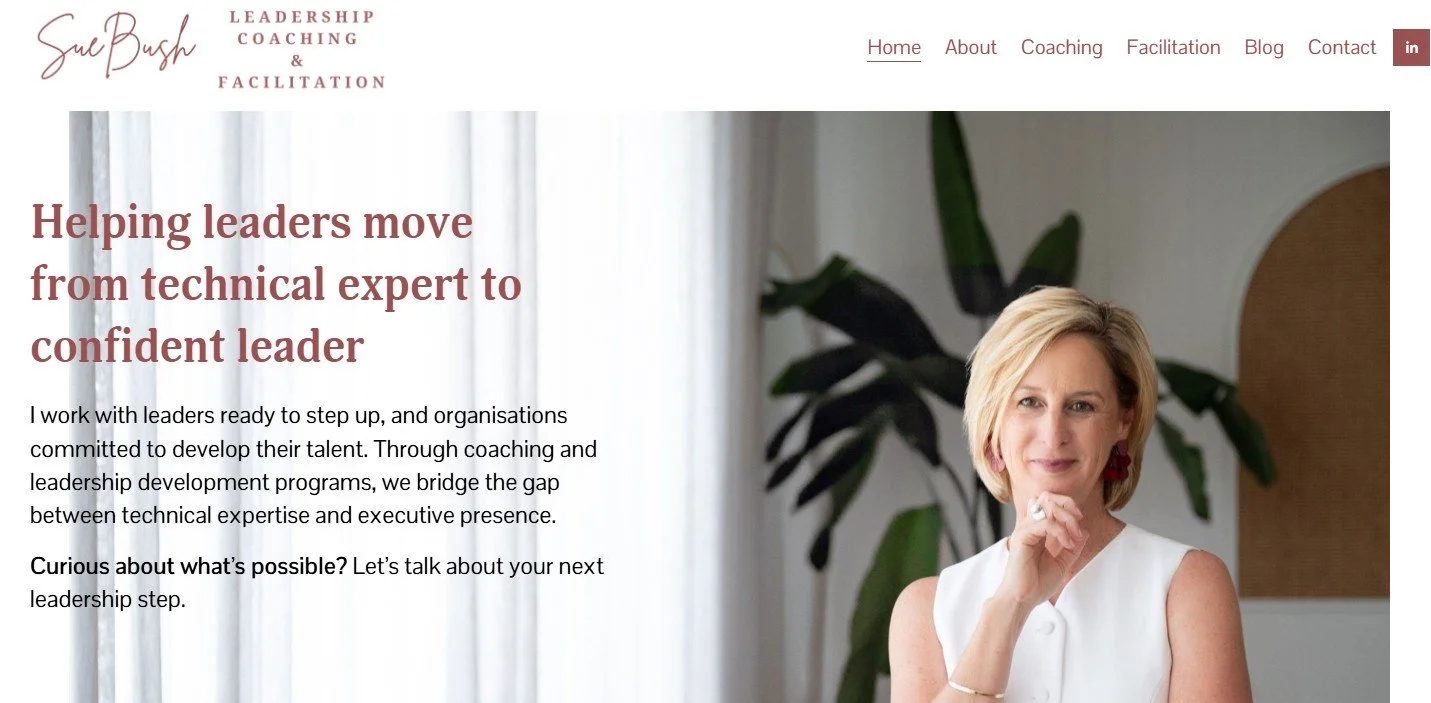
My new website - www.suebushcoaching.com.au
For me, writing was the habit. Clarity was the outcome. For the leaders I work with, coaching often plays that same role. It isn’t a "nice extra." It’s the space where you stop being "on the tools" of your old role and start building the habits of your new one.
Coaching with me is about creating the conditions where you can see your own patterns more clearly, and then choosing small, consistent actions that match the leader you want to be.
If that resonates, I am always open to a conversation.
Until next time,